
How to Use AI Without Losing Quality
Artificial intelligence is changing how businesses brainstorm, write, design, edit and distribute content. A small business can use AI to turn customer questions into blog ideas, create a first draft, repurpose a long video into short clips, or explore concepts for a campaign. But speed alone does not make content useful. Strong results still depend on strategy, accurate information, distinctive insight and human review.
AI in content creation means using artificial intelligence to plan, produce, improve or adapt content such as articles, website copy, social posts, images, videos, audio and email campaigns. The most dependable approach is not “let AI publish everything.” It is to use AI for repeatable work while people provide context, judgement, originality and accountability.
This guide explains where AI helps, where it can fail, and a practical workflow that Indian businesses, marketers and creators can use without sacrificing trust or search quality.
Table of Contents
- What Is AI in Content Creation?
- How AI Is Used to Create Content
- Benefits of AI Content Creation
- Risks and Limitations to Understand
- A Human-Reviewed AI Content Workflow
- How to Write Better Prompts for Content
- AI Content Creation and SEO: What to Do
- How to Choose AI Content Tools
- Practical Examples for Indian Businesses
- How to Measure Content Performance
- Frequently Asked Questions
- Conclusion: Use AI as a Creative Partner
What Is AI in Content Creation?
AI content creation uses models and software to generate or assist with content based on instructions, examples, source material and other context. Depending on the tool, it may suggest an outline, rewrite a paragraph, summarise research, generate a visual, clean up audio, create captions or adapt one asset for different channels.
There is an important difference between AI-assisted content and fully automated publishing. In an assisted workflow, people set the goal, supply verified context, review the result and decide what goes live. In an automated workflow, several steps may happen with little intervention. Automation can be useful for low-risk, repeatable tasks, but publishing without appropriate checks increases the chance of errors and generic output.
Google’s current guidance does not prohibit content simply because AI helped produce it. It does warn against using generative AI to create many pages that add little value and are primarily intended to manipulate search rankings. Google also says generated information can be inaccurate and should be fact-checked before publication (Google Search Central guidance).
How AI Is Used to Create Content
AI can help across a content lifecycle, not just with writing.
| Content task | Useful AI assistance | Human responsibility |
|---|---|---|
| Research and planning | Group audience questions, summarise supplied sources, brainstorm topics and organise a brief | Confirm the audience need, inspect original sources and choose the angle |
| Blog and website copy | Draft outlines, headings, FAQs, product-page variations and first drafts | Add real expertise, examples, original insights and fact checks |
| Social media | Create caption variations, hooks, post calendars and platform-specific adaptations | Keep the brand voice natural and ensure every claim is supportable |
| Images and design | Explore concepts, create draft visuals and prepare variations | Check accuracy, rights, representation, brand consistency and artifacts |
| Video and audio | Generate scripts, subtitles, rough cuts, summaries and voice clean-up | Review pronunciation, context, timing, likeness and disclosure needs |
| Email and sales content | Draft subject lines, nurture sequences and audience-specific versions | Check consent, relevance, personal data use and the promise being made |
| Repurposing | Turn a webinar into clips, a transcript into an article, or a blog into social posts | Adapt the message to each channel instead of copying it everywhere |
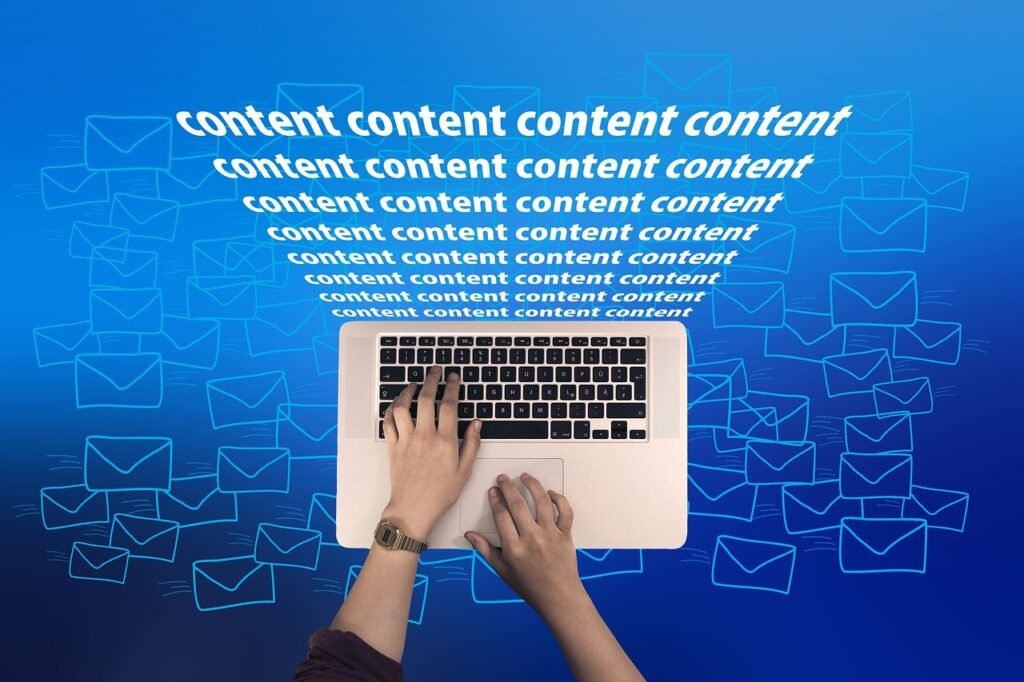
For a small business, one customer interview might become a useful source for an FAQ page, a blog outline, a short video script and a set of social captions. The key is to adapt each version for its audience and platform, while retaining the same verified facts.
Benefits of AI Content Creation
1. Faster first drafts and planning
AI can reduce the time needed to move from a blank page to an organised outline or rough draft. That gives a writer more time to interview customers, validate claims, improve examples and refine the final message. Faster production is a possibility, not a guaranteed outcome; reviewing weak output can take longer than writing it correctly from the beginning.
2. More ways to reuse good source material
A webinar, customer interview, product demonstration or long-form article can provide material for multiple formats. AI helps identify themes and prepare adaptations, which can make a content calendar easier to maintain. Repurposing works best when the original material is accurate and each version offers value on its own.
3. Support for brainstorming and experimentation
AI can suggest alternate headlines, campaign concepts, calls to action and audience angles. Teams can compare several options quickly, then select and improve the ones that fit the brief. Treat suggestions as candidates to evaluate, not facts or final creative decisions.
4. Better accessibility and localisation support
Tools can help prepare transcripts, captions, plain-language versions and first-pass translations. For an Indian audience, AI may help explore English, Hindi, Hinglish or regional-language variants. A fluent speaker should still review idioms, local context, names, numbers and cultural nuance before publishing.
5. More consistent processes
Reusable prompts, templates and review checklists can help a team follow the same process for briefs, metadata and quality checks. Consistency should mean reliable standards—not repetitive content that sounds identical across every page.
A 2025 Ahrefs survey of 879 marketers found that 87% of respondents used AI to help create content, and 80% said they manually reviewed AI content for accuracy. The survey is self-reported and should not be treated as a measurement of every business, but it illustrates why review remains an important part of many AI-assisted workflows (Ahrefs research).
Risks and Limitations to Understand
AI can make content production more efficient, but it does not remove editorial responsibility.
- Inaccurate or invented details: AI can produce plausible-sounding claims, citations, quotes, statistics and product features that are wrong. Open and verify the source behind every important factual claim.
- Generic writing: A polished draft may repeat familiar advice without offering useful depth. Add first-hand examples, process details, customer questions, real experience or a clearly reasoned point of view.
- Brand inconsistency: The writing may be too formal, too casual, overly enthusiastic or unlike the business. Provide examples of the brand voice and edit the output against them.
- Privacy and confidentiality: Do not paste customer records, passwords, private campaign data, unpublished product plans or confidential documents into a tool unless its data handling has been assessed and approved.
- Copyright, likeness and licensing concerns: Check the rights and terms that apply to source material, generated assets, fonts, music, stock imagery and real people’s names, voices or likenesses. Rules and platform requirements can vary by jurisdiction and use case.
- Bias and misrepresentation: Generated material can reflect stereotypes or omit important perspectives. Review people, places, claims and examples with care.
- Overproduction: Publishing more pages is not the same as providing more value. Avoid creating near-duplicate pages merely to target keyword variations.
NIST’s Generative AI Risk Management Profile discusses risks including confabulation, privacy, information integrity and intellectual property. Use it as a risk-management reference, not as a substitute for legal advice.

A Human-Reviewed AI Content Workflow
Use the following process for blog posts, landing pages, social campaigns or scripts.
Step 1: Define the reader and the outcome
Write down who the content is for, what problem they are trying to solve, what they already know and what action should follow. “Write about marketing” is too broad. “Help Indian retail business owners understand how to plan a festive campaign with a small team” is a more useful brief.
Step 2: Research the topic from trustworthy sources
Review relevant search results to understand the questions readers ask, but do not treat competitor pages as the final authority. Prioritise official documentation, original studies, government resources where relevant and credible expert material. Record the source, date and exact claim you intend to use.
Step 3: Create a focused brief
Specify the main question, search intent, primary keyword, supporting topics, audience, tone, approximate depth, desired format, sources and restrictions. Tell the model not to invent facts, quotes, statistics or links. A prompt improves the process; it does not replace verification.
Step 4: Generate ideas or a first draft
Ask the tool for options, an outline or a rough draft. For sensitive or factual topics, constrain it to supplied source material and request a list of claims requiring verification. Avoid giving it permission to invent case studies or customer testimonials.
Step 5: Add human insight
This is where the content becomes more than a generic summary. Add a real example, original comparison, observed customer concern, expert explanation, process detail or useful lesson from your business. Remove stock phrases and unsupported superlatives.
Step 6: Check claims, rights and privacy
Verify dates, figures, names, definitions, citations, technical instructions and product details. Check images and media for artifacts and usage rights. Remove private data that does not need to appear in the final content. Ask a qualified reviewer to check health, legal, financial or safety-related claims.
Step 7: Edit for the channel and optimise
Improve clarity, reading flow, headings, internal links, metadata and image alt text. Make the article easy to scan on mobile. Use natural keyword placement; do not force repeated phrases into every heading or image description.
Step 8: Publish, measure and update
Track the outcomes that matter: relevant organic clicks, enquiries, engagement, conversions or time saved after review. Revisit content when products, facts or user needs change. Keep a named person responsible for corrections and updates.
How to Write Better Prompts for Content
A reliable prompt usually includes six elements: role, audience, goal, context, constraints and output format. For example:
Act as an experienced content strategist. Create a blog outline for Indian small-business owners who want to use AI to plan social media content. The goal is to explain a practical, low-risk workflow. Use the source notes I provide; distinguish verified facts from assumptions; do not invent statistics, quotes, customer stories or URLs. Include one primary search intent, supporting questions, a logical H1/H2/H3 outline, real-world examples and a quality-control checklist. Write in clear Indian English and return the result as a structured outline.
Then improve the output with a second prompt: ask the model to identify vague claims, repetitive sections, missing evidence and statements that need an authoritative source. Use a separate review step rather than assuming the first answer is publishable.
AI Content Creation and SEO: What to Do
Focus on usefulness, not the percentage written by AI
Google’s approach is centred on content quality and purpose. AI-assisted material should meet the same expectations as other content: it should be accurate, original, relevant and created to help people. Publishing large quantities of unoriginal pages mainly to influence rankings can fall under Google’s scaled content abuse policy (spam policies).
Answer the main question early
Give a clear, concise response near the beginning, then develop the subject with evidence, context and examples. Use headings that help readers navigate; do not split an article into tiny sections solely for an AI search system. Google’s current guide to generative AI features in Search says there is no ideal page length or special schema required specifically for generative AI search. The guide continues to recommend helpful content and relevant images and video.
Demonstrate real expertise and be transparent where appropriate
Use accurate authorship, explain your method when useful, cite sources and make it possible for readers to evaluate the content. E-E-A-T is a framework Google uses to discuss experience, expertise, authoritativeness and trustworthiness; it is not itself a single ranking factor. For claims about important decisions, provide especially strong sourcing and expert review.
Use basic on-page and image SEO
- Write a clear title tag and a page-specific meta description.
- Use one descriptive H1 and a logical H2/H3 hierarchy.
- Include the primary topic naturally in the title, introduction and relevant sections.
- Add internal links to related, genuinely useful pages on your site.
- Use descriptive image filenames and contextual alt text. Google’s image SEO guidance says alt text helps communicate image subject matter and supports accessibility; avoid keyword stuffing.
- Add Article or BlogPosting structured data when it accurately describes the visible page. Validate it and keep the author, dates and image details consistent. Structured data can help Google understand a page, but it does not guarantee a particular search appearance (Article structured data documentation).
Do not assume that an “AI detector” score can certify content quality or originality. Judge the article by its evidence, usefulness, accuracy and contribution to the reader.
How to Choose AI Content Tools
Start with the job to be done rather than choosing a tool because it is popular. Evaluate the following categories:
| Need | Tool category | What to check before adopting it |
|---|---|---|
| Research, outlining and drafting | General-purpose AI assistant or writing tool | Source handling, accuracy, context length, privacy controls and export options |
| Grammar, tone and editing | Writing and editing assistant | Support for your language, style rules and how it handles sensitive text |
| Visual concepts and design | AI image generator or design platform | Commercial-use terms, visual consistency, text rendering and editing controls |
| Video, captions and audio | Video editor, transcription or audio tool | Subtitle accuracy, pronunciation, watermark/export rules and consent requirements |
| SEO research and performance | Search analytics and SEO platform | Data freshness, integration with Search Console and clarity about estimated metrics |
| Workflow automation | Content calendar, CMS integration or automation platform | Permissions, approval steps, logs, data retention and rollback options |
Before paying, run a small test with representative work. Compare total time to an approved final asset—not just the time it takes to generate a draft. Review privacy terms, content ownership/licensing language, usage limits, export quality and whether a human approval step can be built into the process. Tool features and terms change, so verify them directly with each provider.
Practical Examples for Indian Businesses
A local service business: Use AI to cluster genuine customer questions into an FAQ outline, draft a service-page structure and create social caption options. The business owner should verify service availability, prices, claims and local details before publishing.
An e-commerce brand: Use AI to prepare initial product-description variants from approved specifications. Keep sizes, materials, warranties, compatibility and delivery statements tied to the product source of truth. Do not invent benefits or reviews.
A B2B company: Turn an approved webinar transcript into a blog outline, a follow-up email and LinkedIn post drafts. Have the subject-matter expert verify technical statements and add lessons that were actually discussed.
A multilingual campaign: Use AI for a first translation or tone adaptation, then ask a fluent reviewer to check idioms, tone, regional nuance, product terminology and whether the call to action makes sense in that language. Hinglish may be right for one audience and unsuitable for another; let audience research guide the choice.
How to Measure Content Performance
Set a baseline before introducing AI, and compare similar content over a meaningful period. Useful measures include:
- Quality: factual corrections, reviewer rework, brand-voice consistency and usefulness feedback.
- Search: impressions, relevant organic clicks, click-through rate and conversions from organic visits, interpreted in context.
- Business impact: qualified enquiries, sales assists, email sign-ups or other goal-aligned conversions.
- Efficiency: end-to-end time to approval, cost per approved asset and the amount of repurposed material that was genuinely useful.
Do not measure success only by how many posts the team publishes. More output is valuable only when the additional content helps the audience and advances a business goal.
Frequently Asked Questions
Can AI-generated content rank on Google?
Yes, AI-assisted content can appear in Google Search if it follows the same quality and spam policies as other content. Using AI is not, by itself, the decisive issue; accuracy, originality, usefulness and the purpose of the content matter. Scaled, low-value content created mainly to manipulate rankings can violate spam policies.
Can AI write an entire blog post?
It can generate a complete draft, but that draft should not automatically be treated as publication-ready. A responsible editor should verify claims and sources, add relevant experience, improve the voice and structure, and check SEO, rights and privacy requirements.
What content can AI help create?
Depending on the tool, AI can assist with blog outlines, website copy, social captions, email drafts, image concepts, scripts, subtitles, transcripts, translations and repurposing. Quality varies by task, language, tool and input context.
Should a business disclose that it used AI?
There is no single answer for every format and jurisdiction. Consider the expectations of the audience, the platform’s current rules, the nature of the content and applicable law. Be especially careful with synthetic depictions of real people, endorsements, voice or identity, and high-stakes information. Do not imply that a real person said or did something they did not.
How can I fact-check AI content?
Break the draft into verifiable claims, open the original sources, confirm dates and figures, validate links and quotations, and have a knowledgeable reviewer inspect technical or high-stakes sections. If a claim cannot be verified, remove it, qualify it clearly or obtain better evidence.
Will AI replace content writers?
AI can automate parts of writing and production, but content strategy, interviewing, original reporting, taste, editorial judgment, subject expertise and accountability remain valuable. Writers who use AI well can spend less time on repetitive tasks and more time improving the work.
Does every AI-assisted article need special AI SEO markup?
No. Google says there is no special schema markup required specifically for its generative AI search features. Use appropriate structured data as part of normal technical SEO when it matches the page, but prioritise a useful page, clear sourcing and good user experience.
Conclusion: Use AI as a Creative Partner
AI in content creation is most useful when it removes friction from planning, drafting and repurposing—not when it replaces expertise. Start with a clear audience need, give the tool reliable context, add something original, fact-check the final work and measure whether it helps readers or the business.
For an Indian small business, a simple and repeatable system is often enough: choose one meaningful topic, use AI to support the first draft, have a real person review it, publish with accessible visuals and clear metadata, then improve it using performance data. The advantage comes from better decisions and a stronger process, not from publishing the most content.
Ready to build a smarter content workflow? Review your current blog and social media process, identify one repetitive step AI could assist with, and test it with a human approval checkpoint before expanding.
Sources and Further Reading
- Google Search Central: Guidance on using generative AI content on your website
- Google Search Central: Creating helpful, reliable, people-first content
- Google Search Central: Guide to generative AI features in Search
- Google Search Central: Spam policies for Google Web Search
- Google Search Central: Google Images SEO best practices
- Google Search Central: Article structured data
- Ahrefs: Marketers using AI publish more content — survey of 879 marketers, June 2025
- NIST: Artificial Intelligence Risk Management Framework — Generative AI Profile